 Forgot Username? Forgot Password?


Saxophone Buyer's Guide

| Introduction | New vs. Used | Play Testing | Models/Brands | |
| Condition | Where to Start | Pricing Issues | Purchasing Online | Final Words |
Welcome to the Saxophone Buyer's Guide! This project compiles over 20 years of experience spent buying and selling saxophones on a regional, national, and international basis. Over the course of these years, we've learned what to look for and how to find it. We've also learned what to watch out for and what some likely scenarios are for getting ripped off. As with any purchase, there are hazards in buying both new and used saxophones. However, by educating yourself and taking a common sense approach, these hazzards can easily be minimized. Hopefully this information will serve you well when it comes time to purchase your first or next saxophone.
This document is divided into sections that address the most frequently-asked questions about buying a saxophone. One of the biggest decisions you will face will be new vs. used, and even vintage vs. modern, so you may want to look those sections over first. Another thing to consider is the level of instrument you wish to purchase. Saxophones are made in student, intermediate, and professional models. Today's market is full of many manufacturers who claim to offer cheap "professional" model horns. The reality is that cheap still means cheap and in most instances you would be better off with an older American made student model sax than one of these so called cheap professional instruments. Read the section on models to learn how not to be deceived by bogus or exaggerated "professional" claims. Older saxes (pre-1980) are generally refered to as "vintage". Don't always equate vintage with good. Don't get us wrong, there are many fantastic vintage saxes out there and these should definitely be considered. In the vintage vs. modern section we will give some tips as to determining the quality of a vintage horn.
As part of this project, we must state that the information here is presented only as a representation of our personal experiences and opinions. Your decisions about purchasing a saxophone should include this information, but should not necessarily be limited to it. The bottom line is that you are making a significant financial decision and need to be as informed as possible to make a sensible judgment. Buying a saxophone is not too terribly different from buying a car. There are LOTS of things to consider and after following the logical list of do's and don'ts the ultimate decision is a very personal one that relies as much as anything on your "gut" feeling about that particular instrument and how it responds to you. Hopefully this guide will serve you well in your sax quest.
This section is for people who might be purchasing a saxophone for the first time. Often younger students have just decided that they want to play the saxophone, and parents are left not knowing much, if anything, about what they need. Schools will make recommendations, but these should be taken with a grain of salt. Sometimes these recommendations are made with little or no consideration given to resources outside the immediate community. Also, band directors forge relationships with local music stores that give them the best prices on merchandise and instruments. This discount may not apply to you as a consumer. The best course of action is to include recommended sources in equal stature to the other sources that you find.
The saxophone is a complex instrument. It is a woodwind instrument, yet is made of brass, which means from a buyer's standpoint, you must be familiar with the design of the instrument and the materials used to make it. Also, the saxophone relies on a mouthpiece and single reed (just like a clarinet) to produce the vibration that becomes the saxophone's tone. Mouthpieces are a separate purchase and will be covered only briefly in this guide.
Saxophone Materials
The saxophone is comprised of two major parts: the neck and the body. The neck is a removable metal tube that attaches to the top of the body (the soprano saxophone follows a different set of rules that I will cover later) and is covered with cork on the very end of it to allow a mouthpiece to slide onto it. The body consists of a conically shaped brass tube with posts soldered onto the body, (or plates called "ribs" attached to the body) which support rods, keys and key cups that hold leather pads to cover the holes on the body. The keys are usually made of brass or nickel and are often covered with mother-of-pearl where your index, pointer and ring finger touch. Sometimes the thumb and pinky also have mother-of-pearl on touch points. Some rare horns had mother-of-pearl on every key.
The saxophone body is generally finished with some protective coating. Nowadays, that coating is usually a high-gloss brass lacquer or clear-coat lacquer which is baked on. Very old (and some new) saxophones were plated in silver, gold or nickel to protect the brass. There are also new anodized black nickel finishes, colorful lacquer finishes, and auto-body paint styled finishes. The finish is mainly designed for appearance, although it does have an effect on the sound of the instrument (there is a great deal of debate about this, and I will address it further later).
The rods of the saxophone are very important. They support and facilitate all of the movement associated with playing the instrument. If they are weak, your saxophone will not stand up to extended or rigorous playing. Also, weak rods are a sign of an inferior horn. Rods can sometimes be the only way to tell if that shiny new saxophone is made to last! On some horns, the rods will be silver while the body is a gold color. This is generally a sign that the horn is a student model. Common student models include the King 613 and Cleveland models, Selmer Bundy II, Evette Schaeffer, Olds Parisian, Vito, Armstrong, as well as later Buescher Aristocrats and Conn M series horns, which started as professional models. (I will address student models in detail later.)
Another key element in any saxophone (especially used) is the pads. Pads cover the holes on the saxophone so different sounds can be produced. If pads do not completely cover the holes, the saxophone will not play properly and will be a great source of frustration for beginning and intermediate students. Even professional saxophonists must deal with this problem on a daily basis. Pads should be soft to the touch and completely cover the adjacent tone holes. Pads are generally light brown in color, being made of leather, and will commonly have metal or brass discs on them called resonators. Brown plastic resonators are also commonly used, and are a good substitute for metal resonators. These discs help reflect sound back into the horn to aid in projection and increase overall volume.
Part Names
Saxophones have specific names for parts, just like a car. As mentioned earlier, the removable tube at the top of the saxophone is called the neck, or sometimes gooseneck (presumably due to the "goose-like" sound produced when you blow on it with the mouthpiece attached).
This is a big decision when it comes to buying a saxophone. A lot of newcomers to the instrument don't even think about used saxophones as an option. If you are on a limited budget, or are not afraid of the research and legwork involved with a used saxophone, that may be the way to go. In this section we will go over some of the pros and cons of each decision to help you decide which choice is best for you. Before discussing the pros and cons of a new horn vs. a used horn we would also like to say that it is always a great idea to purchase a saxophone from a professional saxophone shop. There are several professional shops throughout the United States that specialize in the Saxophone, and many of them will not sell a horn without giving them a full professional setup or overhaul. This is HUGE when buying any horn!!! Many of the big online stores that are selling everything for music that you can imagine are often times just shipping you a horn that they got directly from the distributor, or manufacture. With pro shops, they recieve the horn, take it completely apart, somtimes replace corks and felts throughout the horn with better material, and make adjustments so that the horn is playing at its optimum level. Usually these professional setups are considered part of the sale, because these shops know that you are buying more than just the Saxopohone. You are buying their shops work, and they want to make sure that you are very happy with what you get. A shop like Saxquest located in St. Louis MO, performs professional setups to every brand new saxophone they sell. Just this work alone is $250, but they include it with the sale of every brand new horn. Every used horn has been thoroughly gone through as well, and they are always playing in top condition. Most pro shops throughout the U.S. have a similar system to Saxquest, and will often professionally setup every horn that leaves their shop. It's just a little something extra to think about in your final purchase.
The New Saxophone
Pros of buying a new saxophone: A new sax has special appeal. You know this saxophone is completely ready to play and has no wear or tear on it at all. The lacquer or plating is perfect and the pads are new. You know that it has the most modern mechanism available and utilizes all of the modern production techniques. The new saxophone also offers support, in the way of a warranty, from the factory and/or the music store where you purchased it. Sometimes you can even get a new saxophone at a very good price. There is also a significant psychological effect of knowing that this is a NEW saxophone. For younger or beginning students, that can be a big deal. When you are first starting out, it's not the sound of the saxophone that matters, it's how it looks.
Cons of buying a new saxophone: Buying a new saxophone can be very expensive. New horns can cost up to 10 times as much as their used counterparts (not necessarily the same manufacturer and model, but a comparable professional horn). Another problem found on many horns is a lack of consistency in quality from the manufacturer. With mass production, the artistic nature of producing a musical instrument is often lost. Companies which used to put a lot of time and effort toward craftsmanship have abandoned this approach for the sake of quantity. This is not to say that all horns produced today are shoddy, it is just a fact of modern business that quantity sometimes compromises quality.(This is one good reason why it is good to buy horns from a Professional Saxophone Shop like Saxquest because they will fix many of these inconsistancies.)
The Used Saxophone
Pros of buying a used saxophone: A used saxophone is the most cost-effective option. With literally thousands of choices, a used horn can usually be found in your desired quality and price range. Also, the materials and craftsmanship of older used horns is usually superb. Older (vintage) saxophones usually have a great deal more engraving and frills than any other kind of horn. They are more likely to be plated (instead of lacquered) and have much stiffer brass.
Used horns are also easy to find. Most music stores offer a good selection of used horns, and stores like SaxQuest specialize in classic pro horns. Also there is a wide variety of sites on the Internet where literally hundreds of old saxophones are bought and sold daily. The on-line auction sites like eBay or Craigslist are great places to find a used horn, as are saxophone shops on-line like Saxquest.com. Vintage horns also have a special mystique about them. That 1930 Conn alto was probably part of some swinging big band sax section back in the 40's. That Selmer tenor may have been played at Birdland in the 50's. Often the history of these horns is lost, but the fascination with them seems to live on from one generation of players to the next.
Cons of buying a used saxophone: The hardest part of buying a used saxophone is knowing what it is worth and what kind of condition it is in. Hopefully after reading this guide, you will be better equipped to determine these important facts. Without this vital information, the person selling this used horn has a great advantage over you. And, unfortunately, some people will try to take advantage of you if you don't know what you are doing. Buying horns over the Internet poses another level of complexity since you are relying on a written description or electronic photographs.
This raises another possible complication of buying a used horn from a private party (and sometimes even music stores). Used horns are not always going to be in perfect condition when you go to look at it. Most of the time, especially with vintage horns, the horn has been sitting for a period of time (usually years) and will leak fairly badly. This horn may also have some minor rod or key damage that keeps it from playing properly. In these all-too-common cases, you must try to determine if you can get a good enough idea about the horn to decide if you want to buy it. This is yet another case of where having someone along to try it is a good idea. Obviously when purchasing over the Internet, this tactile examination is often omitted. That is why it is especially important to only purchase from reputable dealers or people who have clearly documented the positives and negatives. I never trust an Internet add or auction that doesn't explicitly detail damage, with pictures. (For more information, see section 9, "Purchasing a horn on-line".)
There is another aspect to buying a used horn that is extremely important. Sometimes the horn you are looking at has been stolen from someone.
Some possible warning signs for stolen horns are:
- Filed down or missing serial number
- A case that has a school's name painted on the outside
- Unrealistically low price for condition and model (especially Selmer!!)
- Strange behavior by the selling party
- Someone who is not a sax player selling a pro horn that looks recently played
- Someone who knows nothing about saxophones or the sax they have
- Someone who will only show the sax outside their home or business
- Someone who is too anxious to sell the horn
When buying or selling a horn, always try to find a way to confirm someone's physical address or phone number before completing the transaction.
I can't emphasize enough how traumatic it is when your instrument is stolen. In my case, it was multiple instruments, and there was no way they could ever be replaced. The story of how my bari was finally recovered bears telling in this section.
While I was in college, I bought and sold saxophones to help pay for tuition. I had signs all over the small town advertising that I was looking for saxophones. A year after my horns were stolen and all but one returned, I got a call from a guy who said he had a bari that he wanted to sell. After asking a few questions, I immediately knew it was my Buescher True Tone that was stolen the year before. Apparently the thief never put 2 and 2 together to figure out that it was originally my horn. I went to check the horn out and played dumb. He was asking $100, and I made a counter offer of $50 which he accepted. I told him I was going to the bank to get the money. He reluctantly agreed. I called the police and they sent a plain clothes officer who purchased the stolen bari for $50, then arrested the guy. I testified in court and he was sent to prison (he had prior arrests for theft and assault). The bari had been mistreated badly while in the thief's possession. Apparently his little sister played it in pep band that whole year.
This story is a classic example of the usual life cycle of a stolen horn. If I had been someone else looking at the horn, I could have easily bought it for $50 and no one would have been the wiser. Meanwhile there would be a player somewhere really distraught over the ordeal. What I did was the right thing. If you suspect a horn may be stolen, report it to the police. Always.
Hopefully by now you know better what kind of horn you are looking for. As you continue, you can narrow your focus to a specific model or brand and then start looking.
If you do not know how to play saxophone, you may be at a disadvantage when purchasing a horn, especially a used one. Saxophones are not all the same; each has a unique set of intonation and timbre problems. The best way to purchase a saxophone is to bring someone who knows how to play it and have them try it out. If you are a player yourself, it is easy to get caught in the moment and not try a horn out as thoroughly as possible.
For players, when you go to try a horn always pack the following essential items:
- Mouthpieces (preferably jazz, classical, and medium models)
- Cork grease (this is a MUST)
- Tuner
- Lots of different strength reeds
- Common sense
- Disinfectant!
For non-players, you should try and examine the horn as closely as possible. If it is a used horn, spend some time just examining the body for damage. If you have a saxophone-playing friend along, make them test every note against a tuner, and play loud and soft. Also, try a chromatic scale slowly from the lowest to the highest notes so you can check for leaking pads. An advanced "trick" is to play the overtones of Bb, B, C and D and compare them to their fingered counterparts. There will be timbral differences, but on a great horn, there will not be a change in the intonation. I also test close multiphonics to see how the acoustics of the horn react.
When it comes to being prepared to check out a saxophone, you can never have enough stuff with you to try them out. If you are going to look at a used alto saxophone, and have mouthpieces for soprano, bari and tenor, bring them along. I once went to check out an alto and found that the guy had several mint condition sopranos, tenors, and a few sopraninos. Had I brought my other mouthpieces, I might have been able to try them out. The moral of the story is to always be prepared. You never know what you may find when going to look at an instrument.
One final tip -- always bring a small container of rubbing alcohol or some other safe anti-bacterial substance if you don't have your own mouthpiece. I have seen some really gross mouthpieces, and if a gross mouthpiece is all that's holding you back from playing that mint condition, gold-plated, 1944 Selmer Super Balanced Action, chances are you'll risk playing on an unsanitary mouthpiece just to try the horn. Don't. Your health is more important, so bring along some anti-germ stuff.
Which MODEL/BRAND is Right for Me?
When you decide that you want to go through with purchasing a saxophone, it is time to determine what your needs are. If you are a beginner with very little money, a student model will probably fit your needs. Most music stores will also rent saxophones if you would like to try one out. If you are an intermediate player with a modest budget, you can look into intermediate model horns such as the Selmer USA models, or Yamaha 52 series, or you can try and buy a used, vintage horn such as a Conn M series, or Buescher Aristocrat. For someone who wants to spend a long time with one horn and has a couple thousand dollars to spend, the choice and search become more difficult. In this instance, you probably know what you are looking for, so we'll mainly focus on choices for limited budgets.
So you have decided you want to look for a student model...
Choices abound for you, but so do pitfalls. As mentioned earlier, there are a lot of differences in the quality and manufacturing of saxophones. The most significant differences between student and professional horns are in the mechanics and materials. Student models generally use more rigorous materials, such as nickel-silver rods, stronger bell braces, side-rod configurations, and heavy-duty lacquer. The trade offs are in sound, feel and appearance. Student horns are usually devoid of decorative engraving and subtle artistic touches.
There are some exceptions to the rules listed above. Recently, there has been a great influx of central-Asian made instruments on the American market. These horns look and sometimes feel like professional models, but are actually student models. How do you know? Sometimes you can't. Just be careful of brands that are made anywhere but the USA, France, Germany, Japan, and for the most part Taiwan. We say for the most part because there are still some horns being put out from Taiwan that aren't up to par, but there are also some great horns coming out as well. A Taiwanise instrument manufacturer called Albest Music has recently(within the last 10 years) started putting out a saxophone brand called P Mauriat that really has kind of taken the world by storm. They are great professional level saxophones, and stand up right alongside all of their counteparts offered from other manufacturers. Another good brand that has come out Taiwan that has recently come across our radar is called Chateau. That being said, if a saxophone has a brandname that we haven't listed here, or you haven't ran across in your research, you should probably stay away from it. If the horn has no country of manufacture, be very wary. Also, these inferior horns are usually lacquered all over the body and rods, just like a professional model (recall that American, Japanese and German student models generally use silver rods with a gold-lacquered body). This is to try and make you think it is a professional model, even though it is not.
Student models are intended to be just that. If you are an aspiring saxophonist, expect within your career to outgrow your student model. As with cars, your first saxophone may not be your last. When you purchase a student model, try not to spend very much money if possible. A common trap is for parents to blindly go to the music store and take the first offer given to them for any price. This scenario is very common in rent-to-own situations. Be sure that you evaluate the purchase price of the horn as a whole (including the interest) and compare it to your other options. For the price of a new student model at the music store, you might be able to buy two good used horns.
Student models come up in the paper and on Craigslist fairly frequently, and are readily available through dozens of Internet sites. The sellers are usually parents (possibly just like you) who have purchased a saxophone for their child who has decided not to play it anymore, or a dealer who has purchased the horn from exasperated parents. Sometimes these used student models belonged to people who stored them in a closet for years. The student models I see in the paper and Internet most frequently are the King 613 and Cleveland, the Bundy, Yamaha 23, and the Vito. These three are fairly common, and each horn, if in good condition, is a good horn to start on. The Bundy and Vito both have key structures which are similar to prefessional horns (although because of this, they tend to have key problems after being played by less than careful students) and have a solid reputation as good instruments. Some people love King student models and some people hate them. A local pro player we know who mostly played tenor just never had the cash to buy an Alto, and he would show up to gigs playing on a King 613 student alto. He made that thing sound like a pro horn too. So while student saxophones may not be quite as well built or artistic as pro horns, they get the job done, and can take you really quite far.
Either fortunately, or unfortunately there are dozens of choices in the student model arena. Horns which in our opinion you should stay away from are: Belmonte, Antigua Winds, Jupiter, El Dorado, Olds Parisian, Conns after the M was dropped from the serial number, Grassi, Conservarte, and most of the Chinese-manufactured horn. The reason we say most Chinese-manufactured horns is because there are some decent horns out there, but they are few and far between. Keilwerth at one time outsourced their student line ST-90 horns to China, and these are actually very well made saxophones, but you should definitely avoid that $100 Chinese made soprano that you see on Ebay. Also some of these companies in recent years have really turned their product lines around, and are now producing very exceptional student line horns. Most brand new Antigua Winds, and Jupiter saxophones we have played have been quite good, but we would recommend staying away from any older used models from these two companies.
Top Student Line Saxophones to Consider:
Yamaha 23
Selmer Bundy
King 613 or Cleveland
Vito
Chateau
Any of these saxophones models is a great place to start. You can generally find used Altos of these brands in Pro-Shops, like Saxquest starting just under $650. There are generally a fair amount of used Tenors out there that start around $800. Once again, it is always good to check out a Pro-Shop like Saxquest, because they have a ton of knowledge, and the horns they sell are guaranteed to play.
So you have decided you want to look for a professional model...
Prepare to break out your wallet. You are going to make a large financial investment, and one that I believe is worth making. Professional saxophones can run up to $4000 for soprano, $6000 for alto and tenor, and up to $10,000 for baritone. Not only is there a wide price range, but there are also plenty of choices to be made about what age of saxophone you want. There are some used saxophones that cost a lot more than new ones, kind of like violin players and the Stradivarius.
When it comes to new professional horns, you are going to hear as much hype as truth about them. A lot of the marketing of new horns depends on the mystique of their older models. This is especially true of Selmer which has essentially dominated the professional saxophone market for 60 years. The newest horns on the market are all strong competitors and deserve to be tried on their own merits. We have a lot of experience with most of the new models out there, and will give our honest crtique of them here. We have full understanding that our experiences with these new horns may be different than other players. All players are unique, so it is easy to understand that opinions will be different from horn to horn. Some players love a certain horn and others hate it. That's why it is always a good idea to visit a pro saxophone shop where you can have a good selection of new horns to try.
Our Experiences with new horns
Yamaha
There are a lot of players who love their Yamaha horns, and for a long time it was hard to figure out why. Older Yamahas had weak construction with rods that bent easily and came out of adjustment frequently. The pads that shipped from the factory were also short-lived and tended to swell in high humidity. Yamaha completely changed these flaws when they came out with the new Custom model. This saxophone is a serious contender for the player interested in consistency of action and intonation. Also, if your saxophone was to be stolen, you know you could go to your local Yamaha dealer and get another identical horn. Yamaha has a very high level of consistency that you don't see with many other brands.
Selmer
This is tough for us because we are very loyal Selmer enthusiasts. Being totally honest we were kind of disapointed with the Super Action 80 Series I. The Series II is a much better horn, and the Series III is a good horn as well. Selmer also has released the Reference 36 and 54 model saxophones which are a throwback to their vintage Mark VI horns. Selmer is really living on hype now more than anything. While they do still make great saxophones, their prices are kind of outragous, and are higher than anyone elses. If you do choose to go with a new Selmer, whether it be a Series II or III, or a Reference model, we highly suggest getting in a position where you can play several, or at least more than one. New Selmer saxophones are not the most consistent horns out there. We have played Reference models that were just as good as some of the best Mark VIs, but we've also played some that were just okay, and if you are going to spend that much bread on a new Selmer it should be one of the great ones.
Keilwerth
Keilwerth saxophones have developed a strong, devoted following, and have even stolen away many devoted Selmer players over the years. While virtually all other saxophone manufacturers have modelled their horns after vintage Selmers, Keilwerth has done something different, and offered a great altenative to the standard. The SX-90R Saxophones from Keilwerth have a great feel, solid intonation, and a huge sound, but similar to Selmer it is a good idea to try and play more than one. The consistancy level is very high horn to horn with Keilwerth, but there are small differences in timbre, and you might find one horn that just feels a little better than another. Also much like Selmer, new Keilwerth saxophones can get a little pricey, so it's good to find the right horn for you.
For a while in the early 2000's Keilwerth kind of fell off the map in competition with the other big saxophone manufacturers. The company was bought out by Buffet Crampon in 2011, and they have really turned the brand around in 2012. We expect to see big things from Keilwerth in the future.
Yanagisawa
Yanagisawa saxophones are very strong horns as well. You generally don't see as many of them as the other three big brands, but they definitely hold their own. The earlier models were much like earlier Yamahas, suffering from the same flaws of having soft metal; making them go out of adjustment. In the last few years, starting around the late 80's, these problems were addressed, and the new horns are quite good. Yanigasawa's top professional model horn is the 991 model. These horns are very consistant, having great action, and impecable intonation. The 901 model is considered their intermediate model horn, but these are just as good as many professional horns. Yanagisawa also has a sterling silver 991 which is an unbelievable horn!! These horns can literally do anything you want them too, but they are also vey expensive.
Yani also produces a curved soprano that we consider to be the best out there. All soprano saxophonists should try one, just to hear the subtle timbral differences a curved model offers. In the past, curved sopranos took a bad rap for playing out of tune. Not so with this sax. It plays remarkably in tune with a very comfortable key layout. The newest model also has a front F, so altissimo (above the written range of the saxophone) is a lot easier. Yanagisawa also produces new sopraninos that are absolutely fabulous.
P Mauriat
P Mauriat is a relatively newer saxophone brand that really took off around 2008. They have also snatched up a lot of big name saxophone artists as endorsers along the way. These horns are manufactured in Taiwan, and are hand assembled. The rolled tone hole models, 67R for Altos and 66R for tenors, have a huge, robust sound that comes pretty close to a vintage Conn sound. Well, closer than anyone else has been able to get. The straight tone hole models, called the System 76, have a little more resistance, and are a little more comparable to a vintage Selmer.
These horns have a great feel and intonation is very solid all the way through. For a long time most horns that were coming out of Asia generally got a bad rap, but the folks at P Mauriat did it right. They bought several of the best vintage horns, and modern horns out there, studied them, and worked to develop a great horn that players would enjoy. We highly recommend these horns. They are also much more affordable in comparison to the other big Saxophone manufacturers.
There are a few other newer brands that we have recently tried that we would highly recommend as well, and those are the TM Custom, Macsax and Viking Saxophones.
As you can probably tell we only have a few different brands mentioned here. There is always someone coming out with a new saxophone, and needless to say we haven't been able to try everythig. That being said, if you are looking at something that isn't listed anywhere in this guide, it's probably best to check out other options first. Remember that this whole guide is just our opinion. If you are in the market for a new horn, try these for yourself.
Our Experiences with vintage horns
This section could easily be an entire novel. There are so many models and brands that summarizing them could take forever. We will try to focus on the horns which we have had personal experiences with and recommend horns which have what we consider to be significant positive characteristics. If you have questions specific to a certain model, you may have to do a little research to find out your answer. Music stores and national saxophone shops can be good resources -- but remember, you must exercise caution when getting information, because you are seen as a potential customer.
Selmer
As this is the most-played vintage professional horn of all time, it seems like a good place to start. Selmers have a rich history and mystique all their own; in fact, many players consider these horns to be the "Stradivarius" of saxophones. Few can argue that there is a lot of hype surrounding these horns -- some justified, some not. We presonally love old Selmer horns, but there are some people out there who really don't like them.
If you haven't read much about the history of Selmer saxophones, or read articles by sax historian Paul Cohen, you may not understand the effect that Selmer has on the professional saxophone community. Selmer effectively raised the bar on all other pro models and patented what is now the standard key layout. Selmer also offered workmanship and true hand-crafted quality that no other manufacturer could touch.
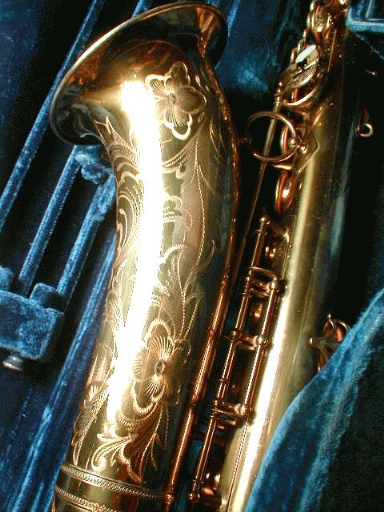
Although C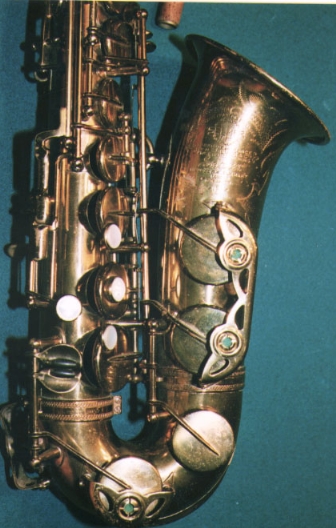 onn produced some marvelous instruments during the saxophone craze in the 1930's, they could not beat the improvements in action and feel offered by the refined Balanced Action model. The Selmer was and is a "player's horn" and was quickly adopted by the greats of the day. For saxophonists today, these old horns can offer a unique alternative to a new horn. Unfortunately, there are very few good deals to be had on Selmers, as most music stores and pawn shops know what a vintage Selmer is and how much it is worth. With the advent of on-line auctions, such as eBay, there was a fantastic resurgence in the number of these saxophones available, but it has started to die off in the last couple years. There are still plenty of vintage Selmers out there, but the price tag has grown recently. Our recommendation is to purchase vintage Selmers from recommended dealers such as Saxquest, or one of the other Pro-Shops around the country. That way you know you are receiving all of the information on the horn and getting a horn that is properly restored. As with any horn, a bad restoration on a vintage Selmer can ruin the instrument.
The reality about these saxophones is that they are getting older every year and restoration is not always feasible. Playing hundreds of these horns left us with the impression that most of the early horns (before the Mark VI) that are in good condition play very well, but sometimes they have intonation problems. That being said, the Balanced Action and Super Balanced Action are still highly sought after, and are even sometimes preferred over the Mark VI.
The Mark VI is a little harder to nail down. We have played many Mark VIs that really didn't sound that great, and some others that outplayed nearly any horn we've ever tried. It seems that there are some years that are consistently good (the 50,000 to 110,000 serial range), and after that, it is trial and error. You can generally see the differences in price as well. Most 5 digit Mark VIs usually command a higher pirce than those starting in the 100,000 range. Unless the horn has been previously relaquered. In our opinion, this really doesn't affect the sound at all. We have played some relaquered Mark VIs that blew away other original horns. Sometimes getting a good playing relaquered VI for $1500 less is the way to go. Mark VIs come with a lot of hype, and they can live up to it, but you should definitely try to play several of them before you buy.
A music store with a Mark VI sitting in the window is going to act as though the horn is made of solid gold. In fact, some music stores even rope them off or put them in glass cabinets. Don't be fooled by this kind of hype. The Mark VI is a truly great saxophone, but you must reserve judgment until you play it. Never purchase a vintage Selmer just because it is a Selmer unless it is extremely inexpensive!
Selmer also released the Mark VII starting in 1975. These are also great vintage horns, and are extremely underrated. They are also considerably cheaper than a Mark VI (usually almost half the price) or even used current production Selmers. Just like the earlier vintage Mark VI though, they can be inconsistant, so you should definitely try them before you consider buying.
Don't let someone sell you a saxophone, especially a Selmer, without verifiying all of the facts first. Find out the serial number, the finish, the condition, and the repair history if available. Also, have the person or store send you detailed photos of the saxophone first, either through the mail or e-mail. Never bid on an on-line auction that does not have photos either in the listing or available through e-mail, and ask specifically for photos showing any damage or wear. Selmers are great horns, so people who have bad ones know that someday, somehow, someone will unwittingly buy it or trade for it. Don't let that person be you!
One final note about vintage Selmers that you may need to know -- just as there is an American-made Selmer today, the same was true during the 20's and 30's. These horns were manufactured by Buescher and sometimes Conn. Sometimes you will see these for sale and shops will tout them as Selmer! In reality, they are just average USA manufactured horns that have the Selmer name. The defining trait is that USA Selmers do not say "Made in France" or have any other French writing on them.
There were also a few Selmers manufactured in Czechoslovakia that are the same vintage as the Selmer Balanced Action. These are great horns, but they are NOT Selmer Paris horns and are not worth any more than a standard vintage horn.
Check carefully before assuming you are looking at an actual vintage Selmer Paris horn.A good way to check is to look for a patent number on the horn, either on the side of the bell or on the back near the thumb rest. The patent number of the Selmer Paris Balanced Action saxophone is 2151337. The patent numbers of the Selmer Mark VI are 2940640, 2710558, 2846917 these are US patent numbers), and 920653 (this is the French patent number.)
Here is a link the Selmer section in the online museum to help you better aquaint yourself with what a good vintage Selmer should look like.
http://www.saxophone.org/museum/saxophones/manufacturer/1
Conn
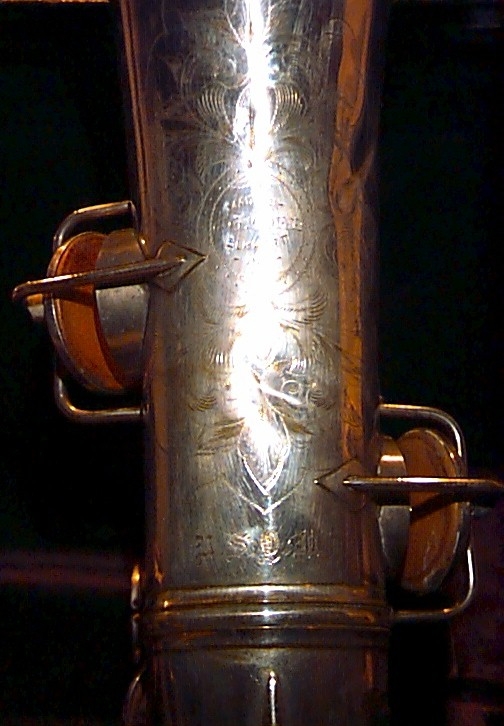
As with Selmer saxophones, we could write an entire novel about Conn saxophones. Instead, we will share our subjective experience with Conns and describe their characteristics.Vintage Conns can be broken up into several models, although many do not explicitly state the model on the sax itself. The first Conn saxophones were produced in 1905 and generally had two octave keys.
Most of these horns are "high pitch" instruments, and are tuned higher than A440 (today's standard for tuning). These are generally considered unplayable in modern ensembles.
Early in production, Colonel C. G. Conn sold his instrument empire to pursue politics. The name of the company changed from Conn to Conn Ltd. The new model introduced by the newly reorganized company was called the "New Wonder."
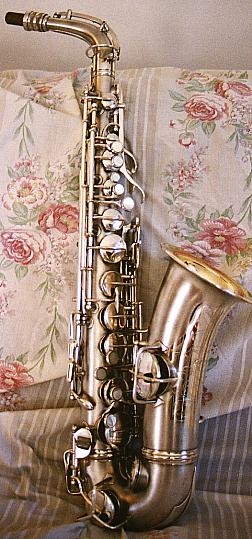
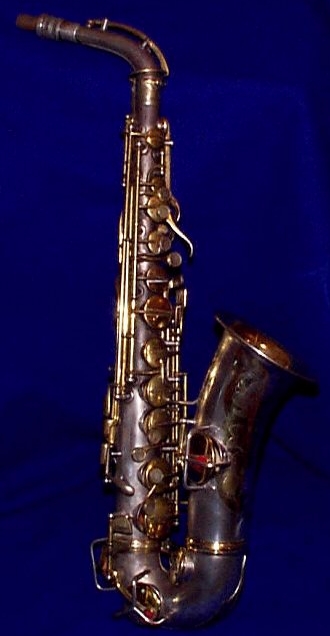 This model underwent some changes but basically remained the same until about 1924-1925. After this point, the horn started gaining some popularity and was sold in mass quantities. This new version of the New Wonder had a cross-hatch pattern on the G# key as well as a cylindrical "tuner" built in to the neck (also true of earlier models).
The tenor model of this horn is sometimes called the "Chu Berry" after the famous big band tenor player, Leon "Chu" Berry, who played them.
These horns play quite well and are fairly common. The serial numbers most players like are above 140,000. This vintage of Conn is excellent, and we recommend it to players who are searching for a lower-priced, professional alternative.
The second model is the transitional Conn which lies somewhere in between the New Wonder and the M series. These transitional horns are excellent, and they lead to a tradition of later specialty horns, including the Connquerer, the 28M, and other models that offered some unique action improvements and a more vibrant timbral approach. The most famous of the early Conn saxophones is the M series, or more commonly the "Naked Lady" model, so called because of the top half of a naked woman engraved on the bell inside a pentagon.
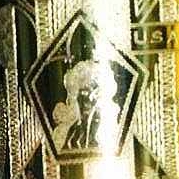
These horns featured a refined action (although not "balanced" like the Selmers), and some unusual keying features. This model also kept the "tuning neck" which was found on earler models. The 6M alto was played by Charlie Parker and a host of other famous players, while the 10M tenor ran a close second to Selmer tenors of the day. Many players chose Conns because of their "big" sound in contrast to the more refined Selmer. Until the advent of the Mark VI, the Conn M series baritone took the lead as the bari of choice for saxophonists, especially in big bands. Gerry Mulligan and Harry Carney were both notable Conn baritone players. As the 40's came to a close, Conn saxophones began losing the race to Selmer, and most players acknowledge that their production quality became inconsistent at that time. The M series was then relegated to student and intermediate model status until the series faded into oblivion.
Here is a link the Conn section in the online museum to help you better aquaint yourself with what a good vintage Conn should look like.
http://www.saxophone.org/museum/saxophones/manufacturer/13
Buescher
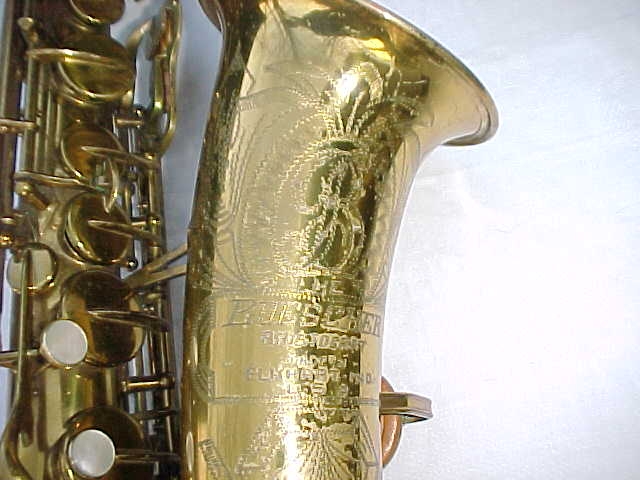
The Buescher is the best kept secret of vintage horns. Bueschers offer a more delicate and refined touch.
The Aristocrat horns are usually fairly inexpensive and reasonably easy to find. The Buescher 400 or Top Hat and Cane (the early version with the silver tone ring around the bell, and top hat and cane engraving) is also an excellent horn and was played by Johnny Hodges (yes, that sweet sound was a Buescher). For the budding saxophonist in search of a good horn for not too much money, this horn is a logical choice. The only down side of these horns is the action, which can be a little cumbersome compared to a modern horn, especially the Bb spatula key cluster. It's no wonder that Selmer chose the Buescher company to produce their American counterparts. The Buescher professional model of the 40's (the Aristocrat) is an incredibly well-designed and well-produced horn.
Here is a link the Buescher section in the online museum to help you better aquaint yourself with what a good vintage Buescher should look like.
http://www.saxophone.org/museum/saxophones/manufacturer/16
Martin
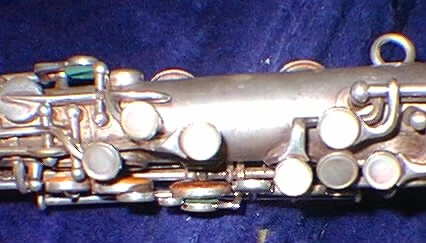
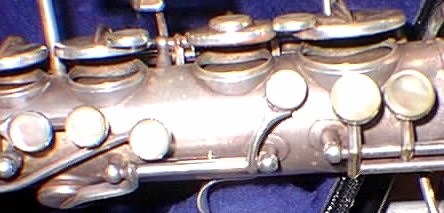 The Martin company was a company that wasn't afraid of trying new things. Many of their early models were downright peculiar. The oddest of all their models is the "typewriter" model which had small round keys instead of spatula clusters. All of the keys look the same, and the horn is very uncomfortable to play.
"Typewriter" Right Hand Keys "Typewriter" Left Hand Keys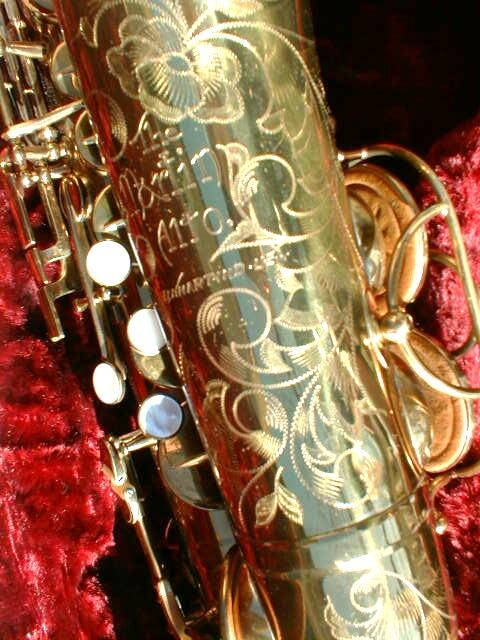
Martin changed models fairly frequently until they settled on a model simply called "The Martin _____" where the blank is soprano, alto, tenor or baritone. These horns are very good, and have an extremely dedicated following. This is another good consideration for a vintage pro horn.
Here is a link the Martin section in the online museum to help you better aquaint yourself with what a good vintage Martin should look like.
http://www.saxophone.org/museum/saxophones/manufacturer/55
King
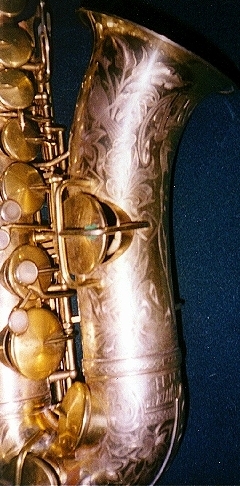 Another excellent choice in the vintage saxophone realm is King saxophones. King saxophones were typically the most ornate and "extravagant" of all American-made saxophones. Their crowning jewel is the Super 20 model, which in it's Silversonic version sports a solid sterling silver neck and bell, mother of pearl on every key, and sometimes even gold plated inlaid engraving (even on the larger key cups)! These are stunning horns that have the sound to back up their physical beauty.
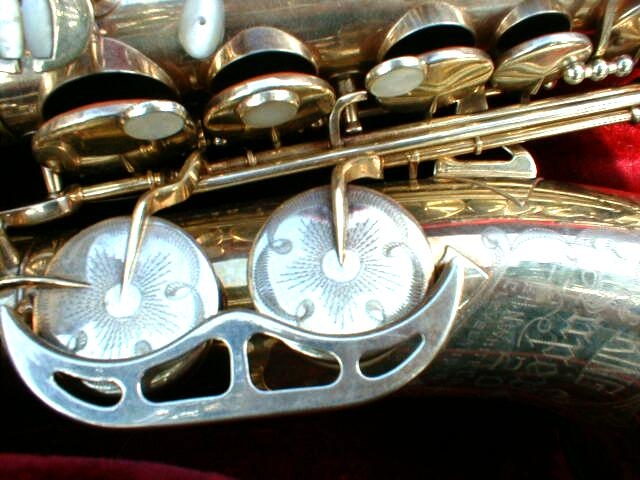
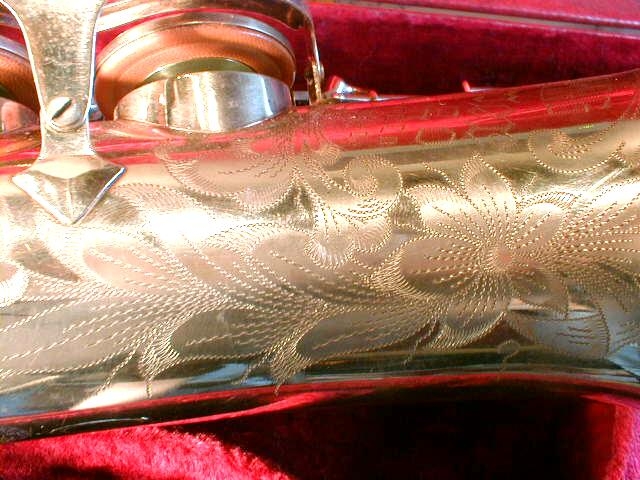
Artists like Charlie Parker and Cannonball Adderly made the Super 20 a real hit among professional players, especially in the 50's. King saxophones, especially the Super 20 and Zephyr models, are extremely well made with very stiff metal. These horns seem to last and put up with a lot of playing. The Cleveland models(Cleveland is stamped on the bell, and that is the city they were manufactured in) are considered by many to be the best vintage Super 20s. The factory eventually moved to East Lake, OH, and many of the early East Lake horns are quite good, but the overall craftsmanship, and consistancy began to go down after the factory move.
Here is a link the King section in the online museum to help you better aquaint yourself with what a good vintage King should look like.
http://www.saxophone.org/museum/saxophones/manufacturer/56
SML
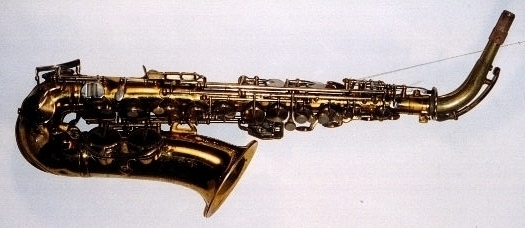
Over the years vintage SML saxophones have really began to develop a strong following. These are much less expensive that vintage Selmers, and can be seen in the same relative price range a vintage Bueschers and Martins. Because they have recently started gaining momentum as a good affordable professional level saxophone, the price has started increasing. These horns were manufactured in France and the most popular models are from the 50's and 60's vintage. They are known as the Rev D. and Gold Medal models. Honestly we haven't had a whole lot of experience playing these horns, but they really have developed a big following, and they even made some horns for King for a little while. We have tried the King Marigaux(Marigaux is the M from SML) sopranos, and they are fantastic. A really great even sounding soprano with solid intonation. Considering they were able to make a great soprano it is likely that their other models are pretty decent if not good.
Here is a link the SML section in the online museum to help you better aquaint yourself with what a good vintage SML should look like.
http://www.saxophone.org/museum/saxophones/manufacturer/61
By now, hopefully you have made some determinations about what you would like to look for. You have probably narrowed your choices so you are ready to actually look for and look at horns. Here are the questions you should have answered so far:
- What is my price range?
- What model? (student or professional)
- New or used?
- What brands appeal to me?
- Are there resources locally to try them, or do I need to look outside of my area?
Some of these questions, especially the question of new or used, will require more information to make an informed choice. But, hopefully you are starting to get a feel for what kind of sax is right for you.
How Can I Tell What CONDITION a sax is in?
So you may have found a saxophone you are interested in. When you go and look at it, you already know the basic parts of the saxophone and general problem areas, such as rods and pads. This is just the beginning of determining what condition a saxophone is in. As with a car, you want to "look under the hood" to see what kind of maintenance, repair, and care has been given to this horn. There are very subtle things to look for that can change the value of a horn significantly. The more horns you look at, the better equipped you will be to know exactly what you are looking at.
General Condition
Looking at a horn when you open the case will immediately give you an impression of what kind of life the horn has lead. If it gleams and looks well cared for, you can guess that it was rarely played or treated exceptionally well. If you open the case and detect a foul odor and find green deposits all over the horn, chances are this horn isn't the one for you.
Of course there are exceptions to every rule, so don't let a bad smell turn you away until you ask some important questions about the horn and its condition. We will go into greater detail about these items as the section progresses so you can try and determine if the horn's current owner is telling ou the straight story on the saxophone in front of you. One note of caution: if the owner says "this horn belonged to...", be skeptical, unless the owner has positive proof. In most cases, truly famous players' horns either wind up staying in the family or going to a close friend or musical associate. Chances are that the one you are looking at isn't the one Bird used to play "Star Eyes" on the "Swedish Scnapps" album.
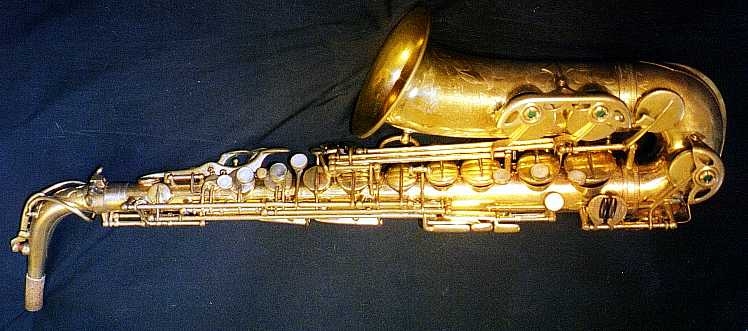
These are the questions the owner should be able to answer. If the owner doesn't know some of this information, chances are the person is a dealer or has not owned the horn for that long. If the person can't answer any of these questions and acts nervous, the horn may be stolen, in which case you can ask for the serial number and call the police to have them check it out.
Questions to ask the owner of that vintage horn...
- Is the horn in good playing condition?
- Does the horn play reasonably well in tune in all of the registers?
- Does the horn still have its original factory finish, or has it been relacquered?
- What percentage of the finish is still intact?
- When was the last complete service and repad?
- What is the exact serial number?
- What is the model name or number?
- How long have you had the saxophone?
- Who owned it before you?
- Do you know any specific information such as manufacture date? If so, where did you get this info?
- Do you play it regularly, or has it been sitting for an extended period of time?
- Has the horn ever been seriously damaged?
- Has the horn ever had dents removed?
- Does the horn currently have dents?
- Why are you selling this horn?
- How did you determine the value of the horn*
* This question is useful for people who are asking an unusually high amount for a horn. Case in point, I once called on a Conn alto listed for $1000. I assumed it was an extraordinary 6M, but instead it was a Mexican-manufactured student model. Apparently she was told by the local music store it was worth $1200, so she was going easy on the price. The actual market value on the horn was closer to $300.
The Body
The body is the most important part of the saxophone. It needs to be in good condition in order for the sax to play well. If the horn is dented or damaged, pads may not seat correctly or unusual tonal anomilies can occur. The body should be smooth and round. There should not be flat spots or raised, bumpy spots. Some small dents, called ping dents, are fine. These usually occur on the bow and are a result of careless players whacking the horn on a chair or other items. Small (less than 5mm across) dents will not affect the sound of the horn, but excessive dents should be figured into the price.
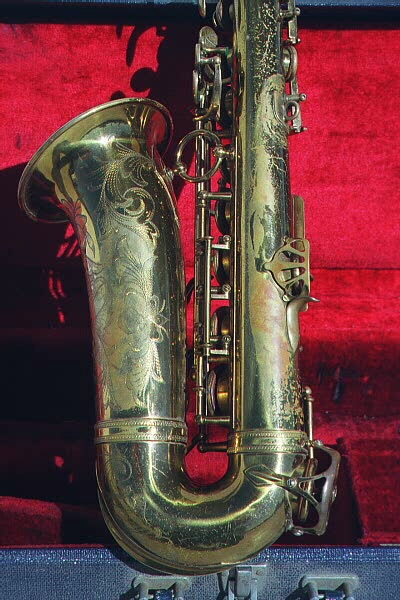
1938 Selmer Balanced Action alto saxophone with ping dents, possible evidence of a dent-pull by the thumb rest and general lacquer wear
There are ways to tell if a saxophone has suffered any major dents. The best way is to look for spots where there are vertical lines of distortion in the lacquer. These are caused by the technique used to remove dents from a saxophone. A repair person puts a metal ball on the end of a metal rod, then slides the saxophone onto the rod. The sax is then pushed gently down onto the ball and rocked back and forth. This pushes the dent back up, but also distorts the lacquer where the dent is. The lines are a result of the rocking motion used to pull the dent. On horns that are plated, this will be harder to see. Just look for any abnormal distortion in the finish. Chances are if it looks strange, the horn may have taken a hit at sometime. It's just like looking for Bondo on a used car.
Another facet of the body is the soldering. Solder is used to hold all the parts onto a saxophone. You should never really see solder unless the horn has been damaged and repaired at some time. If you see lots of solder globs on the horn, consider it a warning sign.
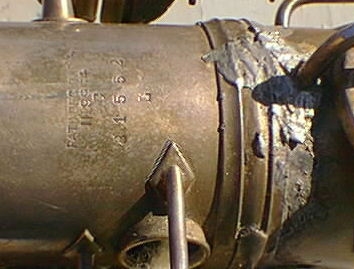
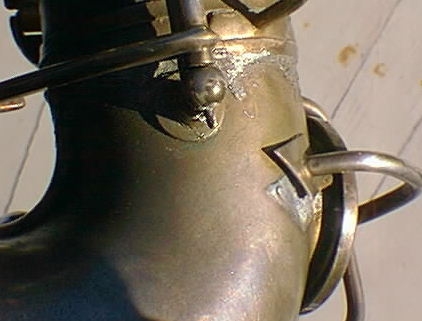
Chances are, the horn has been repaired by someone who is not qualified. On some horns, especially those manufactured by Martin, the tone holes are soldered on instead of drawn from the metal of the body. This can be a real challenge for repair techs, because when the horn is heated up, sometimes the solder comes loose and the tone holes actually fall off the horn. This can be a repair nightmare and can cause a great deal of expense. When looking around the tone holes, be sure and look for solder. It might not hurt to ask if the tone holes are drawn or soldered.
There are two techniques in place for evening out tone holes for proper pad seating. The first, and most recommended way is to tap the tone holes up on the uneven spots from inside the saxophone. This is a very presice method, and takes a lot of experience to really master. The second process involves physically filing down the metal on the tone hole. This method is much quicker than the first, but it does involve removing metal from the saxophone. Once again, if it is done by someone who really knows what they are doing it is a perfectly acceptable repair. But if done to much this process can lead to the degredation of integrity of the tone hole metal and can eventually make a tone hole unusable. The worst danger is that a repair person will take off too much metal in the process. Once the metal is gone, you can't go back. When you look at the tone holes, make sure there are no pads actually touching the body of the horn, especially on the palm keys. The pads should always rest on top of the tone hole, and never touch the main body of the instrument!
Finish
The finish of the saxophone is a subject of great debate. Does the finish actually affect the tonal characteristics of the horn? In our experience, the type of finish does affect the timbral characteristics, although not in an extreme way. The metal that the horn is made of seems to make a much greater difference than the finish used. The one difference in the way the finish can seiously affect the horn is in the case of relacquering. This is not because a new layer of lacquer has been added, but because the old layer of lacquer must first be stripped off the horn through a buffing process which can remove precious metal from the body and tone holes. That being said, there are some great playing relacquered horns out there, and some that are done so well that it is actually really hard to tell if the horn is original or relacquered.
Finish can also significantly affects the value of a horn. In most cases, if a horn is gold plated, it is worth more than a horn that is silver plated. If a horn is silver plated, it is worth more than one that is lacquered. If a horn has its original finish, it is worth more than one that has been relacquered. As a buyer, you need to determine if the horn you are looking at is what the person selling it says it is. I have been told many, many times that a horn was gold plated when it was actually lacquer. If I didn't know what gold plating looked like, I could have easily been fooled. Here are the ways to determine if a horn is what they say it is:
 Gold Plating
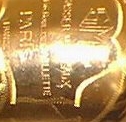
This is a hard determination to make without the experience of seeing a gold plated horn, although a good way to tell is to compare the color to any gold jewelry you may be wearing. Lacquer is bright and brassy, or dark and coppery looking. Gold has an unmistakable yellow, muted quality to it. Also, since gold plating cannot be directly applied to brass, there must be a layer of silver plate under the gold plate for the gold to "stick" to. Look for areas where the gold may be wearing off. You should see silver around those areas. If all you see is brass, be wary. Also, there are only a few models which were actually gold plated. The section above about vintage saxophones named several professional models by name. All of these models had a gold plate option available. The most common gold plated horns are Bueschers and Conns. A lot of Buescher True Tone saxophones are gold plated. Also, plating on vintage horns is often done in "satin finish." This means that the finish looks sand blasted (matte) instead of shiny, like satin. Certain parts of the bell may be shiny while the rest of the horn is satin finish. Lacquered horns will never have this appearance.
 Silver plating
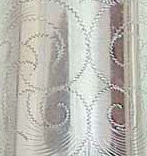
Silver plating is easy. If it is tarnished and black, it's silver! A well-polished silver plated saxophone will still have some black tarnish on it around the posts, even if it is shiny and not satin finish. If it is silver looking and has no tarnish, and looks REALLY shiny with a slightly black reflection, it's nickel plated, not silver. Also, nickel plating flakes off, instead of wearing off evenly like silver. On a silver plated horn, you may see brass showing through where the silver is evenly worn and the wear spots will have smooth edges, not jagged.
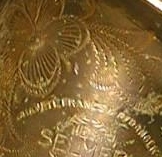 Original Lacquer
This is the hardest thing to determine about a saxophone. Even trained eyes can be fooled by a good relacquering job. Some dealers even go so far as to re-engrave a horn so it looks brand new. There are some good ways to tell if a horn has been relcquered, especially for certain models. Generally, the best way is to use common sense. If the horn is from 1924 and has shiny lacquer, it's not original. Old lacquer develops a dark hue and inevitably wears down in places where it is in contact with skin, clothing and the case. Also, if the horn looks buffed or has "scour" marks on it, it is not original. Original horns will have sharp, clear engraving with solid edges and clean lines. All of the writing will be easy to read, and the serial number will be completely legible.
Some possible clues of a relacquered horn are:
- The engraving is "fuzzy" looking, or worn unevenly compared to the rest of the horn
- The serial number is unreadable
- Decorative dots or lines are faded (especially on Selmers)
- Overly bright appearance on an older horn
- Uneven or mixed-color finish
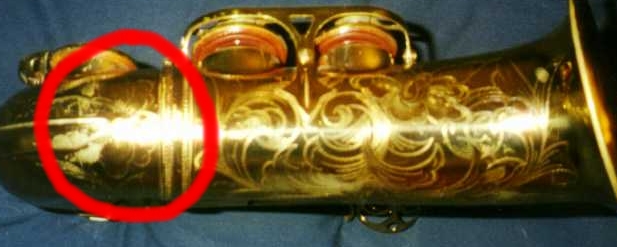
It's hard to see, but this 1950 Selmer Super Balanced Action alto has been relacquered... notice the shallow engraving on the top part of the bow
If the horn shows some of these signs, it may not be original. If you suspect it is not, don't be afraid to question the selling party. If there is a specific reason for some anomaly, perhaps they can explain it. If you don't receive a good answer, you may want to keep looking.
Rods and Pads
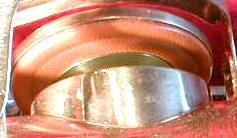
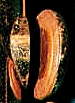
Brown plastic resonator Metal resonator
Pads without resonators can lead to a "stuffy" or muffled sound and should be avoided at all cost. Some repair technicians use these non-resonator type pads because they are cheaper than the other type. Certain horns, such as early Bueschers, use pads which require metal snap-on resonators that hold the pad in the key cup.
The Neck
The neck is a very sensitive part of the horn. Neck damage can be an elusive and troublesome problem.
The neck should be completely smooth with no dents. The neck should not have any kinks in the metal. A common and sad misfortune to befall necks is the "pull-down." This comes from inserting the neck into the horn, then putting the mouthpiece on afterwards. Sometimes a careless player will pull down on the neck while it is inserted in the horn and cause it to bend down. A lot of pull-downs can be fixed, but if the neck has had previous repair it should figure into the cost of the horn. It is easy to tell if a neck has previously been pulled down in the past. You will be able to see lines, or splits in the lacquer along the side of the neck where the metal was bent out.
The neck also needs to be the correct one for that horn. If there is a serial number on the neck, make sure it matches the serial number of the body. Also, the neck should usually have the same color of finish (there are some exceptions, such as the King Super 20 which has a silver neck) and should have matching identifying marks. If it is a Buescher Aristocrat, and there is a big "S" on the octave key on the neck, then you have the wrong neck.
Other things
There are, no doubt, other considerations which I omit here. The bottom line is to make sure the horn looks like it is in good shape. You also want to make sure the sax looks like a horn you want to play. Don't judge a horn solely on its looks. Some of the most ugly, worn-looking horns are also the best playing horns. A horn that has no dents and has 50% of its original lacquer probably plays very well -- otherwise it wouldn't have a good body with a lot of finish missing. Playing a saxophone will add wear and tear. There is no way around this problem. In fact, some players' natural body chemistry reacts with the finish of their horn and can remove finish or metal at a much faster rate. The condition and the sound are the most important factors.
Where do I start ?
The preferred places to start looking for a saxophone allow you to actually play the instrument or have someone play it for you. If you are interested in more selection than is available locally, it is highly recommended that you find a national pro shop or dealer that allows you a period of time to try the saxophone out. We will detail some of the major places to look for a saxophone and some of the issues involved with each type of purchasing location.
The Newspaper
The newspaper is the single best place to look for local, cheap, used horns. I have gotten some great deals through the paper. The only problem with the paper is that it can be a very fickle place to search. There are lots of other players and collectors watching that paper besides you. I have driven many miles to look at a horn, only to find it sold when I got there, or not at all as described. Also, horns sold through the paper are usually student models. You must know how to ask the right questions to determine this ahead of time. Sometimes people forget (sometimes on purpose) to tell you that it says "Bundy" after the "Selmer," or "Cleveland" after the "King." You may think it's a cream puff when it's really a lemon. You will get very good at telling people what to look for on the horn itself. The following is a sample dialogue of how I "interrogate" people over the phone who are selling horns that they know little about.
Mark: Hi, I'm calling about the sax you have advertised in the paper. Can you tell me more about it?
Seller: Well, what would you like to know? It's kinda gold looking.
Mark: Well, start by telling me exactly what it says on the bell...
Seller: It says "Made by something...." uh maybe Conn?
Mark: Okay, is it gold all over, or does it have silver rods?
Seller: It has gold-colored rods. Yeah, it's gold all over it.
Mark: Can you tell me what the engraving looks like? Are there flowers in a pattern around the writing on the bell?
Seller: Why yes... there are flowers all around the name, and they go down to the middle of the bell.
Mark: Okay, what is the serial number? It's located under the hook-shaped piece of metal located on the back side of the horn towards the bottom. It'll probably say something like "Pattented 1914" and have an A by it.
Seller: Yes, I see it. It says: 227104.
Mark: How long have you had the horn?
Seller: I bought it in high school in 1972 and it has been sitting in the case since then.
Mark: Does it have a round, serrated tuner mechanism on the neck?
Seller: No... it just comes out to a piece of cork.
Mark: Are you sure? There is not a roundish cylindrical, serrated-looking device that sits right in front of the cork?
Seller: Yes, I'm sure. It's actually the only part of the sax that has silver on it. It has a silver key on the neck, and it's slightly brighter finish than the rest of the horn.
Mark: Okay, well thank you very much for your time. I wish you luck in selling it.
What this conversation told me was that this Conn saxophone was a "New Wonder" model alto that had probably been relacquered and was missing the original neck. It also told me the date of manufacture and how long the owner had the saxophone. One could suppose that the horn was modified by the person who sold the horn to the seller in 1972.
This whole process may seem like 20 questions, but basic questions like the ones above can save you a lot of misery. Have your checklist handy when calling, and write down ALL of the answers.
The Music Store
This is usually the friendliest place to buy a sax. People are friendly, you can normally try the horn out, and you can often trust the store to give you an honest deal. The music store is a great place to shop because there is usually a mixture of old and new horns to choose from. Compare the feel of a new horn versus an older horn. Don't be afraid to ask questions.
Music stores can also be dangerous for buyers that are uninformed. Music stores sometimes take advantage of the fact that they are businesses and fleece the unsuspecting or uninformed. First-time buyers can wind up paying a lot more than a horn is worth, especially in rent-to-own situations. Music stores are sometimes just as ignorant about saxophones as the uninformed buyer. This can either be good or bad, depending on if they charge more or less for their instruments. The more you know, the better equipped you are to do business with a music store.
The Pawn Shop
It is with some reservation that I bring up a pawn shop as a place to buy a saxophone. But there are many pawn shops that do indeed sell all kinds of band instruments so it certainly needs mention. In general, I don't recommend the pawn shop as the place for parents to go looking for a student model saxophone for their budding young saxophone beginner. The reason is that most pawn shops don't have a repair facility and don't offer service/maintenance plans or have warranties. Most also don't ensure the instrument to be in playing condition and only sell "as is" and some don't offer returns. Also, you may or may not get the needed accessories included with the instrument. What may seem like a deal at first may not end up being such a great deal when its found out that $350-$500 in repair is needed and/or that the mouthpiece is broken. That's not to say you can't find good deals at pawn shops. It just means that you need to ask the right questions and make sure you know what you are buying. If an instrument is being sold as "fully serviced" or "in excellent playing condition" ask about guarantees and warranties. Ask if you can have it looked over by a local repair shop. Most pawn shops can pre-authorize a credit card for this purpose. Any reputable repair shop will gladly inspect a third party used instrument for a small fee (usually in the $25 range). Be weary of "cash only" deals. All of that being said, If you know what you are looking for, pawn shops can be a great place to find a bargain. Many professional players I know always check out the local pawn shops when on the road. You just never know what you may turn up. Its not quite like it was in the days before the Internet, when most pawn shop owners saw a saxophone as a saxophone and that was it. Now days, most pawn shop owners are fairly well educated as to the high dollar saxophone brands. But not always. Let your good judgment guide you when it comes to these businesses. Most pawn shops are reputable, but its still the first call most police make when taking a "stolen instrument" call. As you learn more about saxophones, you will be better able to take advantage of potential deals from pawn shops and avoid the potential pit falls.
The Internet
The following sections will deal with purchasing a horn on-line in depth. Two words always apply with any on-line purchase... BE CAREFUL!
Online Mail Order
Mail order from online sites is the method in which most horns are sold on a national level. I suggest an extreme level of caution when buying horns from national dealers. Make SURE you ask all the questions before spending your hard-earned money. There are dealers out there who make a regular point of cheating customers. Just be careful, and don't take unnecessary chances. If something seems "fishy," go with your gut and keep looking.
The problems with pricing
The final section of this guide is a testament to how complicated buying a horn can be, especially when it comes to pricing. A horn is worth what you are willing to pay for it. That is really the bottom line. Unfortunately, some horns (as mentioned earlier) are so entwined in mystique that their value has been falsely inflated. This is especially true in vintage horns that fetch high prices on the national market and low prices in local markets. Some horns, are just not worth what people ask for them. Also, there are horns which are priced well below what they could be worth to players. A classic example of this is the Couf. These horns were manufactured by Julius Keilwerth for Herb Couf and are some of the finest instruments ever made. Oddly enough, on the market they don't go for nearly as much money as, say, a Selmer Mark VII or a used Yamaha 62. Even Selmers are victim to the pricing game. For the most part, you won't see pre-Balanced Action Selmers selling for very much money. Most people would rather have a vintage Conn than a pre-Balanced Action Selmer.
Collectibility has really made it hard to purchase some horns as a player. The "Chu Berry" Conn is a great example of this. They are truly great horns, but are they worth more than a Selmer Mark VII? This variability and price inflation may be one of the hardest problems you'll face when you go to buy your horn. Let the facts speak for the value of the horn. If the horn doesn't play, you don't know how it sounds, and the value should drop accordingly. If the horn is dented, bashed in, and mistreated, and a Mark VI, it is not automatically worth $2500 just because it is a Mark VI. Instruments are meant to be played. You must decide if you are a player or a collector. Let that be your final guide when it comes down to putting your money in someone else's pocket.
Wholesale vs. Retail
The most common question we field regarding used horn pricing is why national dealers charge "lots of money" for a horn they are not willing to "pay that much" for. The explanation is a basic free-market principle called "wholesale and retail pricing." Wholesale products are those that are intended to be value-added, meaning they receive some treatment by the final seller that enhances their overall value. The retail price includes this value-added portion. In the world of used saxophones, a reputable dealer adds value to a used horn by fully repairing it, advertising it, and representing it. This may not seem like much up front, but there are many hidden parts to the added value such as a return policy, an 800 number, electronic communication, and business-level recourse in the case of fraudulent activity. Working with a dealer may be a much safer way to spend your money than private party sales, if only because as a business they are bound to a higher level of governmental and community control.
This issue is one that has caused a great deal of confusion and bad feelings, especially among those wishing to sell their used horns. Although some dealers do exaggerate the value of the horns they sell, when you buy a horn that is in good repair and ready to play, it does add some value to the dollars you spend. From the dealers' point of view, it makes business sense to buy horns at a low price and sell at a higher price to reflect the time and money spent improving the horns and offering extra services. As a buyer, it's also important for you to understand that someone privately selling their old used saxophone for top dollar is selling a wholesale instrument at a retail price without adding any value to it whatsoever. You will likely spend extra money to get it to the same level a dealer would offer, and without the advantages mentioned above. It's okay to pay top dollar privately if you are getting an instrument that you are totally satisifed with or one that is in perfect playing condition. This distinction of wholesale and retail is something that you shouldn't be afraid to use in your negotiations with a private seller. Why should you pay X dollars for this horn when you can pay the same money and get a repadded, guaranteed instrument?
Purchasing a horn on-line
The internet is the mainstay of national saxophone sales in today's world.
A bit of history
In the beginning of the Internet "gold rush," a really interesting thing happened. Horns began appearing in Internet classifieds at the prices they were selling for in the real world. This was the first time that a widely-distributed media revealed local pricing structures that had been previously hidden by geographic and economic diversity. In plainer terms, the value of vintage saxophones varied widely depending on where you looked. Internet-savvy dealers were witnessing an enormous market opening before their eyes, where Selmers and other desirable horns were now widely available at unbelievably low prices. The public was unaware that the Internet classifieds were a radically different animal than their local classifieds. Suddenly the old reed player in Walla Walla, Washington, received calls from New York on his old saxophones instead of from across town. In these early stages, a tremendous amount of money was made and the used horn market was like a treasure chest sprung open, ready for plunder.
As with other gold rushes, the market forces in play were ultimately unsustainable. Dealers began greedily posting "saxophone wanted" ads in every on-line classified advertising section they could find. Horns were often sold the same day they were listed. While all of this was going on, more information on horn pricing became publicly available. People also became more accustomed to the idea of the Internet as a source of research material on almost any subject. It became clear that the Internet was a global market with thousands of people willing to pay lots of money for the items they were buying. Horns were suddenly worth much more money than before.
When on-line auctions began to materialize, this became painfully eveident, and the huge disparity in prices began to equalize. Dealers were forced to compete with the local-level market on the same terms as a national competitor, since the Internet provides, in one place, an equivalent and much more diverse inventory.
Another curious repercussion of on-line auctions is the realization that some horns are not nearly as rare as dealers previously wanted us to believe. Anyone can now pick from hundreds of Selmer Mark VI saxophones available 24-hours a day, every day, and at reasonable prices. Were it not for the Internet, it is quite likely that Selmer saxes would be selling for $5000 a piece no matter what their condition or quality, although there would still be regional inequalities hiding in the Heartland.
The Internet today
When searching for a new or used saxophone, there are literally hundreds of places to look on-line for it. Most major music stores and individual dealers offer Internet sites. Many of the individual dealers out there got their start from the early days of the "gold rush" and have no real business, while others had a limited national presence before the Internet.
It is important to make a distinction between these three on-line business types, because each offers a unique set of considerations.
Music Stores
Music store web sites are the on-line representation of an existing storefront, or chain of storefronts. Within this category, there are three different types of businesses: non-specialized single-store retailers, specialized single-store retailers and non-specialized multi-store retailers.
A non-specialized single-store retailer is often the music store down the street from you. These types of stores usually carry a diverse inventory, although not normally heavy in new/used saxophones. The major advantage of this kind of retailer is that sometimes pricing reflects the regional cost structure. These stores tend to have a good connection to the community as well as a good in-flow of used instruments. The down side of these stores is that they rarely have expertise specific to any single instrument. Repairs are usually done by someone in-house who may or may not have a thorough understanding of saxophones. I have seen some great horns at small shops destroyed by inexperienced repair technicians. It just depends on the individual shop.
Specialized single-store retailers offer the most comprehensive selection of inventory and expertise. These are shops like Saxquest. They are often run by one or more saxophone players or collectors who know which horns are desirable and why. Repairs are generally handled in-house, which means the quality of the repair is usually excellent. The down side of purchasing from a store like this is that prices will be higher than other non-specialized stores, or individual dealers with little or no overhead cost. As described in earlier sections, the prices reflect value added by the business. In essence, you get what you pay for, assuming that the dealer you are purchasing from is honest and reputable.
Non-specialized multi-store retail stores, or more commonly called chain stores, are (in our opinion) generally the least desirable place to purchase a used horn. These stores often lose touch with the local music community and are staffed by people who know little about music or instruments in general. A salesperson who is working on commission (the normal means of compensation in a chain store) is more likely to say what you want to hear. In the business of saxophones, this can be devastating since there are so many variables in the condition and playability of an instrument. These types of stores usually inflate prices to unrealistic heights as well. This reflects their general misunderstanding of used instrument values and quality. If you are looking for a new horn, it can be a different story, since chain stores may have a wider selection coupled with standardized retail pricing.
Individual Dealers
Before the Internet, individual dealers offered a change of pace from national retailers. They usually had a good selection of highly desirable or collectible horns and some personality that was often missing from larger stores. These dealers typically relied on the premise that vintage horns were incredibly scarce and extremely valuable, a premise that the Internet has radically dissolved. My personal experience with individual dealers has been highly variable and usually negative, as detailed in earlier sections. The web sites of these businesses are good places to go for the research phase of your purchase. They normally allow you to look at pictures and prices and get some idea what price range you'll be looking in for the horn you wish to buy. If you do decide to purchase from an individual dealer, make sure you ask all of the questions up front and know where you stand if you need or want to return the instrument. Because they are not businesses with a storefront, your recourse in the event of a misrepresented instrument is limited at best.
On-line Auctions
Anyone who has been to an auction in some dusty barn surrounded by cool old antiques knows the rush of bidding on something you really want. On-line auctions have a similar feeling, although with a certain sterility. Above all, on-line auctions offer a dizzying array of merchandise for you to look at in an easy-to-view format. That's the good part.
The bad parts of an on-line auction are the unknown nature of the merchandise, the seller and the final price. Many times the seller is uninformed and misrepresenting the instrument they are selling. There are many stories of purchasing fiascos and fraud from the trenches, and I anticipate it only getting worse as time goes on. There are dealers who use eBay exclusively to sell their instruments; so much so that they don't even bother having a web site! Other sellers include hobbyists, private party sellers and antique stores. The bottom line of purchasing a horn through an on-line auction is BE CAREFUL!
There are many specific things to watch for when you bid on a saxophone (or any other item). Check the feedback rating of the seller to see if it is positive. If it is positive, is it all recent, or is it spread out over a long period of time? Some unscrupulous sellers will have dozens of aliases that put feedback on each of their various other accounts. To the untrained eye, it looks like they have lots of glowing feedback, but the truth is it is all self-generated. Another feedback-boosting tool some sellers use is buying or selling lots of inexpensive items specifically to receive good feedback. Check the items they have sold or bought and make sure it relates to the item at hand. If not, they may be waiting for the right person to purchase a misrepresented item.
Pictures in an auction can be very misleading. Sellers will often take pictures that emphasize the best parts of a horn. Also, ping dents and other small forms of damage are easily concealed as are relacquered instruments. Pictures can also be digitally edited. Here is a small example:
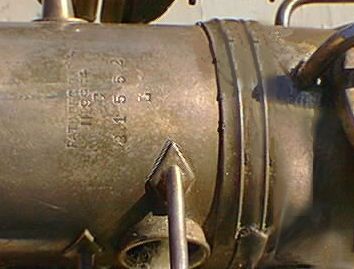
My final recommendation on purchasing a horn through an on-line auction is to communicate in-depth in writing with the seller, even if the auction listing has a great deal of information. It can never hurt to ask too many questions! You are about to spend a lot of money and you are in the power position.
On-line Wrap-up
Besides the sources above, there are many other ways to find used and new horns on the Internet. Included in this list are news groups such as rec.music.makers.saxophone, and alt.music.saxophone. There are also a myriad of classified sites such as classifieds2000. As with all other sites and sellers, ask the questions beforehand, and get as much information as possible.
A few final words...
In closing, the best piece of advice we can give is to be as informed as possible. This guide should be your starting point. Hopefully after reading this you can start to make intelligent decisions about what you want to look for and how you want to find it. Never be afraid of asking "dumb" questions. The only dumb question is the one you don't ask.
One other point of importance is that every one's choices are different. Just because David Sanborn plays a 144,000 series Mark VI alto and a Dukoff mouthpiece doesn't mean that you have to. You may like something completely different and unique. Your tastes will even change as you evolve as a player. When it gets down to it, it is not the saxophone making the music, it is you! Your attitude will improve your playing more than any horn ever can. So if you can't afford the best and most expensive horn on the planet, try and make the best decision you can with what you have, and remember that the music is what it's all about. You will grow with whatever instrument you have, as long as you love it and cherish it. After all, it's now yours!